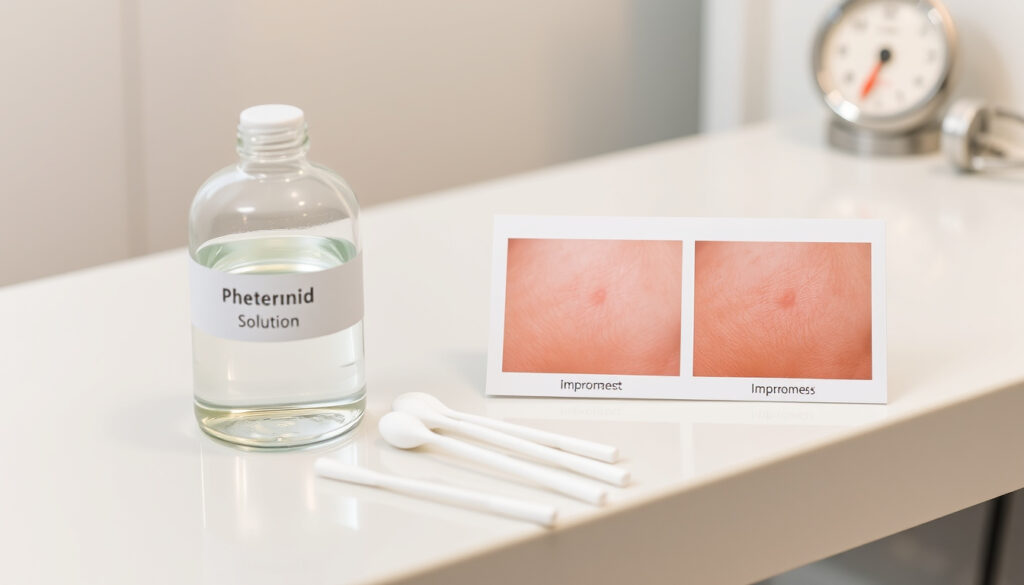
Phenol Peel Before and After: Results, Pain, Cost & Safety
If you are weighing a phenol chemical peel — the deepest and strongest chemical peel in dermatology — you have likely seen the striking before-and-after photos circulating online. This article lays out what the clinical evidence and patient experiences actually say about results, pain, cost, and safety, so you can decide if the trade-off is worth it.
Recovery time before new skin develops: 10–15 days ·
Average cost range (USD): $2,000–$6,000 ·
Duration of results: many years to permanent ·
Depth classification: deep chemical peel ·
Phenol ban status in EU cosmetics: banned above 0.5% concentration
Quick snapshot
- Many years to permanent (Women’s Health magazine)
- Typically 10+ years (Women’s Health magazine)
- Requires sun protection (Women’s Health magazine)
- Most painful peel type (HKB Plastic Surgery)
- Sedation or anesthesia mandatory (HKB Plastic Surgery)
- Recovery discomfort 1–2 weeks (HKB Plastic Surgery)
- Low risk if performed by specialist (StatPearls / NCBI)
- Heart monitoring required (StatPearls / NCBI)
- Scarring and infection possible (StatPearls / NCBI)
Here are the key facts about phenol peels at a glance.
| Key fact | Value |
|---|---|
| Recovery time | 10–15 days for new skin |
| Phenol concentration in medical peels | Typically 50–88% (StatPearls) |
| Regulatory status in EU cosmetics | Banned above 0.5% concentration |
| Cardiotoxicity risk | Cardiac monitoring mandatory; resuscitation equipment required (StatPearls) |
| Number of treatments usually needed | Single treatment sufficient for most patients |
| Anesthesia type | Local or IV sedation (HKB Plastic Surgery) |
How long do phenol peel results last?
Expected duration of results
- Phenol peels produce effects that last 10 years or more, often considered permanent after a single treatment (Women’s Health).
- The deep penetration of phenol into the reticular dermis triggers collagen remodeling that continues for months after the peel (HKB Plastic Surgery).
Factors that influence longevity
- Sun exposure, smoking, and natural aging can shorten the visible improvement.
- Patients who maintain strict sun protection and a good skincare routine tend to keep results longer.
The implication: a single phenol peel can effectively reset the clock on deep wrinkles for a decade or more, but the patient’s lifestyle plays a large role in how long that reset holds.
How painful are phenol peels?
Pain levels during the procedure
- Phenol peels are consistently described as the most painful type of chemical peel (Women’s Health).
- Patients report a burning or stinging sensation that can last about 45 minutes during application (Dr. Hung MD).
Pain management options
- The procedure is performed under local anesthetic, IV sedation, or general anesthesia (HKB Plastic Surgery).
- Post-procedure discomfort is managed with prescription pain medication during the first 1–3 days.
The trade-off: the pain is significant, but it is confined to a short window — the procedure itself and the first few days of recovery.
How much does a phenol peel cost?
Average cost range
- Costs typically range from $2,000 to $6,000 (Women’s Health).
- WebMD reports an average of around $1,800 per session, though this can vary widely.
Factors affecting price
- Surgeon experience, geographic location, and the extent of the treated area all influence the final fee.
- Total pricing often includes anesthesia, facility fees, medications, and follow-up visits (WebMD).
Why this matters: a phenol peel is a serious financial commitment, and since it is considered cosmetic, most insurance plans will not cover it.
Are phenol peels safe?
General safety profile
- When performed by a qualified plastic surgeon in a medical setting, phenol peels are considered safe (Mayo Clinic).
- However, phenol is systemically absorbed and can affect the heart, kidneys, and liver, so cardiac monitoring is standard during the procedure (Mayo Clinic).
Risks and complications
- Risks include temporary heart arrhythmias, infection, scarring, milia, acne eruptions, and permanent pigment changes (Women’s Health).
- Deep phenol peels are not recommended for Fitzpatrick skin types IV to VI due to high risk of prolonged or permanent pigmentary change (Indian Journal of Dermatology).
The catch: safety depends heavily on patient selection. Candidates with darker skin tones or pre-existing heart conditions face higher risk and may need to consider alternative treatments.
Which is better for aging skin: microneedling or chemical peel?
Comparison of outcomes
Six points of difference, one clear pattern: phenol peels treat deep structural damage in a single session, while microneedling offers milder results with much less downtime.
| Factor | Phenol peel | Microneedling |
|---|---|---|
| Depth of treatment | Deep dermis (reticular) | Papillary to mid-dermis |
| Number of sessions | 1 treatment | 3–6 sessions |
| Downtime | 10–15 days | 1–3 days |
| Result longevity | 10+ years | 1–2 years |
| Pain level | Severe (sedation needed) | Mild to moderate |
| Suitable for dark skin | Not recommended (IV–VI) | Safe with proper settings |
Suitability for different skin conditions
- Phenol peels are best for severe wrinkles, deep acne scars, and significant sun damage.
- Microneedling works well for mild to moderate aging, fine lines, and texture improvement with minimal risk for darker skin types.
The pattern: if you need dramatic, one-and-done correction and can tolerate the recovery, a phenol peel wins on longevity. For gradual improvement with lower risk, microneedling is the safer bet.
Why is phenol banned in skincare?
Regulatory status in cosmetics
- The European Union bans phenol in cosmetic products at concentrations above 0.5% due to toxicity concerns, including systemic absorption and cardiotoxicity.
- In the United States, the FDA does not prohibit phenol in cosmetics but restricts its use in over-the-counter products.
Medical use exceptions
- Medical-grade phenol peels performed by physicians are not considered cosmetics — they are regulated as medical procedures.
- Professional peels use concentrations between 50–88%, far above the cosmetic threshold, but are applied under controlled conditions with cardiac monitoring (StatPearls).
What this means: the ban applies to leave-on or rinse-off cosmetic products, not to in-office medical treatments. The high concentration used in a medical setting is precisely why cardiac monitoring is required.
A patient with Fitzpatrick skin type V considering a phenol peel for acne scars should know that the risk of permanent hypopigmentation outweighs the benefit for most providers — modified peels exist for Asian skin types but outcomes are less predictable (Indian Journal of Dermatology).
Phenol peel recovery timeline
- Day 0 (Procedure): Phenol peel applied under sedation; immediate stinging and burning.
- Days 1–3: Significant swelling, redness, and crusting; pain managed with medication.
- Days 4–6: Peeling begins and completes; raw skin underneath.
- Days 10–15: New skin forms; pinkness may persist for weeks.
- Weeks 2–4: Gradual improvement in skin tone and texture; final results visible over months.
- 1 year+: Results fully mature; collagen remodeling continues.
Redness can last two to three months, similar to a sunburn (Dr. Hung MD). The full before-and-after transformation is not immediate — it unfolds over weeks.
Anyone scheduling a phenol peel must plan for at least two weeks of social downtime, plus several months of sun sensitivity. For working professionals, that means budgeting time off and being prepared for visible redness well into month two.
Confirmed facts
- Phenol peels produce long-lasting results (10+ years) (Institute of Plastic Surgery).
- Pain is severe, requiring sedation (HKB Plastic Surgery).
- Cost ranges from $2,000 to $6,000 (WebMD).
- Phenol is banned in EU cosmetics above 0.5% concentration.
- Cardiac monitoring is required during the procedure (StatPearls).
What’s unclear
- Exact permanent duration depends on individual skin aging and sun exposure — no study has tracked a single cohort for 20+ years.
- Comparative effectiveness of phenol peel vs microneedling for specific skin types beyond anecdotal evidence is not fully established in long-term head-to-head trials.
- Individual results vary significantly based on surgeon skill and aftercare routines — no standardized protocol exists.
“The pain is significant enough that IV sedation is typically required, and we monitor the heart continuously. Patients need to be prepared for that.”
— Dr. John Burns, plastic surgeon, Dallas TX
“Phenol peels can cause dramatic improvement in skin smoothness and brightness, but the recovery is intense. It’s not a lunch-break procedure.”
— WebMD medical review team, What You Should Know About Phenol Peels
“Phenol is absorbed into the body and can affect the heart, kidneys, and liver. Cardiac monitoring should be available when phenol is used.”
— StatPearls / NCBI Bookshelf, Chemical Peels: Medical Considerations
For the person with moderate to severe wrinkles or deep acne scars who is willing to endure a demanding recovery, the phenol peel remains the gold standard in a single treatment. For those with darker skin, milder aging, or a tighter schedule, the choice is clear: a less invasive option like microneedling, or a series of medium-depth peels, will deliver results without the cardiac risk and extended downtime.
rupahealth.com, drjohnburns.com, beautifi.com, pmc.ncbi.nlm.nih.gov
For those considering a phenol peel, it is helpful to first review standard chemical peel results to understand the differences in downtime and intensity.
Frequently asked questions
What is a phenol peel used for?
It is used to treat severe wrinkles, deep sun damage, irregular pigmentation, and some precancerous skin changes (actinic keratoses).
Can a phenol peel remove acne scars?
Yes, especially deep rolling or boxcar scars. The peel reaches the reticular dermis where scar tissue can be remodeled. Results depend on scar type and depth.
How long does swelling last after a phenol peel?
Swelling is most pronounced during days 1–3 and generally subsides by day 7. Some puffiness may linger into the second week.
Is a phenol peel covered by insurance?
No, phenol peels are considered cosmetic procedures and are almost never covered by health insurance.
What is the difference between a phenol peel and a TCA peel?
Phenol is deeper, more painful, requires sedation, and yields longer-lasting results (10+ years). TCA peels are medium-depth, have shorter recovery, and usually need multiple sessions.
Can men get a phenol peel?
Yes, men are candidates as long as they have Fitzpatrick skin types I–III and no contraindications. Results for coarse wrinkles in men can be dramatic.
Are phenol peels safe for dark skin tones?
Standard guidelines advise against deep phenol peels for Fitzpatrick skin types IV–VI due to high risk of permanent hypopigmentation (Indian Journal of Dermatology). Modified peels exist but outcomes are less predictable.
More related posts
 Who Won AGT 2025? Jessica Sanchez’s Victory After 19 Years
 Gluten Free Sourdough Bread: Safety, Recipes, and Brands
 Bankruptcy Attorney Near Me: Costs, Rules & Debt Discharge Guide
 Lilo & Stitch 2025: release date, cast, and story details
 Ole Miss Rebels Football: Egg Bowl, Hotty Toddy & Traditions
 Stimulus Check 2025 Update: Latest IRS Facts and Rumors
 Euphrates River Drying Up: Bible Prophecy and Science Explained
 Black Friday Deals 2025: Dates, Tips & Best Offers in Ireland