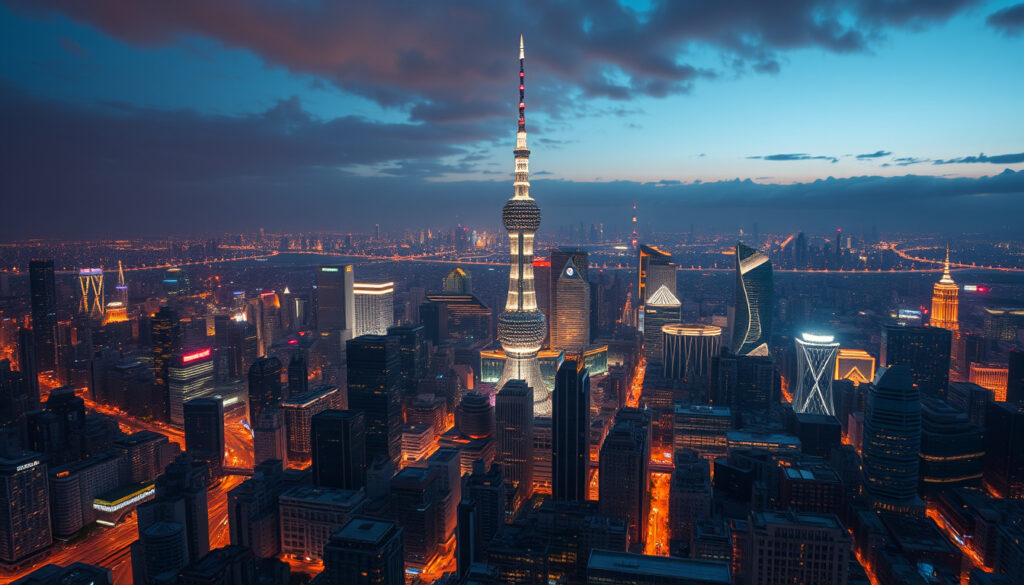
Largest Cities in the World – Top 10 by Population 2024
Urban centers worldwide continue to expand, with metropolitan areas now housing unprecedented numbers of residents. Understanding which cities rank as the largest requires navigating different measurement methodologies and data sources, each presenting distinct population figures for the same urban centers.
The world’s most populous cities span continents, with Asian metropolitan areas dominating the rankings. These urban giants collectively represent hundreds of millions of inhabitants, shaping global demographics, economies, and environmental patterns. The challenge lies not in identifying these cities, but in accurately measuring and comparing their populations across inconsistent definitions.
What Are the Top 10 Largest Cities in the World by Population?
Population estimates vary significantly depending on whether researchers measure administrative city boundaries, urban areas, or metropolitan regions. The most widely cited rankings, drawing from 2024 metropolitan population data, place Japanese and Indian cities at the summit of global urbanization.
Four metropolitan areas stand out as the most populous urban concentrations on Earth.
| Rank | City | Population (Metro) | Country |
|---|---|---|---|
| #1 | Tokyo | 36.95 million | Japan |
| #2 | Delhi | 35.52 million | India |
| #3 | Shanghai | 31.05 million | China |
| #4 | Dhaka | 25.36 million | Bangladesh |
| #5 | Cairo | 23.53 million | Egypt |
| #6 | São Paulo | 23.17 million | Brazil |
| #7 | Mexico City | 23.02 million | Mexico |
| #8 | Beijing | 22.98 million | China |
| #9 | Mumbai | 22.54 million | India |
| #10 | Osaka | 18.97 million | Japan |
These figures represent metropolitan area populations, which include the central city and surrounding suburban regions. Rankings shift considerably when different measurement approaches are applied, with alternative sources placing Jakarta, Dhaka, or Tokyo-Yokohama at the top depending on the data methodology used.
- Asia hosts 19 of the world’s 33 megacities, representing more than half of all cities exceeding 10 million residents
- Tokyo maintains its position as the largest single metropolitan concentration despite Japan’s declining national population
- Delhi has experienced rapid growth, narrowing the gap with Tokyo in recent years
- Four of the top ten cities are located in Asia, with three in China alone
- The combined population of the ten largest metropolitan areas exceeds 263 million residents
- African and South American cities appear in the top rankings, though growth rates differ substantially
According to alternative UN data, Jakarta leads with 41.9 million residents, followed by Dhaka at 36.6 million and Tokyo at 33.4 million. These discrepancies arise from differing definitions of metropolitan boundaries rather than actual population differences.
What Is the Difference Between City Proper, Urban Area, and Metro Population?
Population statistics for the same city can vary dramatically depending on which geographic and administrative boundaries researchers apply. Understanding these distinctions proves essential for interpreting ranking data accurately.
How Is City Population Measured?
The United Nations recognizes three primary methods for quantifying urban populations, each producing different results for the same metropolitan region.
City proper refers to the administrative boundaries of the central municipality. This most restrictive measure includes only residents within formally designated city limits, excluding suburban communities that may function as integrated parts of the urban economy.
Urban area expands beyond city limits to encompass the contiguous built-up zone, including surrounding communities with high population density. This approach captures the continuous fabric of urban settlement even when political boundaries separate administratively distinct municipalities.
Metropolitan area represents the broadest classification, incorporating the city, suburbs, and economically connected surrounding regions. Metropolitan definitions often include multiple municipalities bound together through commuting patterns, infrastructure networks, and economic integration.
What Defines a Megacity?
Urban planners and demographers classify any city exceeding 10 million residents as a megacity. This threshold, while arbitrary, marks a significant population milestone that presents unique infrastructure, planning, and sustainability challenges.
The number of megacities worldwide has grown from 10 in 1990 to 33 today. The United Nations projects this number will increase to 37 by 2050, with nearly all new additions located in developing regions of Asia and Africa.
Mumbai illustrates how measurement methodology affects rankings. The city’s population registers at 17.7 million when using urban agglomeration figures, yet reaches 22.5 million under metropolitan area definitions. Both figures appear in reputable sources, explaining apparent contradictions in ranking tables.
Which City Is the Largest by Land Area?
Population-based rankings dominate most discussions of urban scale, yet land area presents a separate dimension of urban size. Cities with smaller populations may encompass vast geographic territories, while densely populated urban centers might cover relatively limited ground.
Comprehensive land area data for all major metropolitan regions requires specialized geographic analysis beyond standard population statistics. Researchers interested in comparing cities by physical extent should consult dedicated urban geography databases that compile standardized land measurements across different measurement methodologies.
Land area measurements for metropolitan regions vary significantly between sources due to differing definitions of suburban boundaries and incorporated areas. Comparing these figures requires understanding each database’s specific methodology.
Where Are the World’s Largest Cities Located?
Geographic distribution reveals stark patterns in global urbanization. The concentration of megacities reflects broader economic, historical, and demographic forces shaping settlement patterns across continents.
Are There More Megacities in Asia?
Asia definitively dominates the global megacity landscape, hosting 19 of the world’s 33 cities exceeding 10 million residents. This concentration extends beyond the largest urban centers to encompass the broader structure of global urbanization.
Latin America follows with 5 megacities, including São Paulo and Mexico City. Africa contains 4 cities above the megacity threshold, with Cairo, Lagos, Kinshasa, and Johannesburg representing the continent’s major urban concentrations. Europe and North America host fewer megacities but maintain substantial metropolitan populations.
Why Does Asia Dominate Urban Rankings?
Several interconnected factors explain Asian urban dominance. High birth rates in many Asian nations contribute substantial natural population increase, while rural-to-urban migration channels additional residents into metropolitan areas. Economic growth in China, India, and Southeast Asian nations has accelerated urbanization beyond historical rates.
The region’s vast population base means that even modest urbanization percentages produce enormous urban concentrations. China alone has witnessed hundreds of millions of residents relocate from rural areas to cities over recent decades, creating metropolitan areas of unprecedented scale.
How Is Urban Population Expected to Change?
Global urbanization continues at remarkable speed. As of 2025, approximately 4.8 billion people—roughly 58 percent of the world’s 8.2 billion inhabitants—live in urban areas. Projections indicate this proportion will climb to 67 percent by mid-century.
The timeline of metropolitan growth reveals accelerating transformation. In 1950, New York and Tokyo represented the world’s largest urban concentrations, each housing approximately 12 million residents in their metropolitan regions. By 2000, Tokyo had emerged as the clear leader with over 30 million residents, while multiple Asian cities had entered the top rankings. Today’s rankings reflect continued shifts toward South and Southeast Asian metropolitan areas.
- 1950: New York and Tokyo each held approximately 12 million metropolitan residents, representing the world’s largest urban concentrations
- 2000: Tokyo emerged as the undisputed leader with over 30 million residents, joined by other Asian and Latin American cities
- 2024: Tokyo, Delhi, and Shanghai lead with populations exceeding 30 million, while Dhaka, Cairo, and Mumbai approach the threshold
- 2050 projection: Dhaka is projected to become the world’s most populous city with 52.1 million residents
UN projections indicate Cairo will grow 26.6 percent by 2050, reaching 32.4 million residents. Conversely, Seoul is expected to decline from 22.5 million to 21.2 million, reflecting demographic aging in developed nations. Guangzhou shows more modest growth, expanding from 27.6 million to an estimated 29.2 million.
What Is Certain and What Remains Unclear?
Despite extensive research and multiple authoritative data sources, significant uncertainties persist in urban population analysis. Clarifying what researchers know definitively versus what remains contested helps readers interpret ranking data appropriately.
| Established Information | Information That Remains Unclear |
|---|---|
| Tokyo, Delhi, and Shanghai rank among the five largest metropolitan areas globally | Precise ranking order varies between sources due to differing methodologies |
| Asia hosts the majority of the world’s megacities | Exact metropolitan boundary definitions vary between national governments and international organizations |
| Global urbanization is increasing as a percentage and absolute number | Future growth trajectories depend heavily on economic development and government policies |
| Dhaka and Cairo are among the fastest-growing major metropolitan areas | Whether Dhaka will actually reach 52.1 million by 2050 depends on multiple uncertain factors |
| The number of megacities is increasing globally | Precise population counts for some cities remain disputed due to informal settlements |
Why Does Urban Population Measurement Matter?
Accurate population measurement serves multiple critical functions in urban planning, economic analysis, and policy development. Government representation, infrastructure investment, and resource allocation all depend on reliable population figures.
City boundaries determine electoral districts, administrative responsibilities, and fiscal resources. Metropolitan definitions affect transportation planning, environmental regulation, and housing policy. International comparisons require standardized methodologies that allow meaningful cross-national analysis.
Researchers at organizations including the United Nations, World Bank, and academic institutions continuously refine population measurement techniques, incorporating satellite imagery, mobile device data, and administrative records to improve accuracy. Despite these advances, fundamental definitional questions about urban boundaries persist.
The UN projects the world’s urban population will increase by more than 1.7 billion people by 2050, fundamentally reshaping global demographics, economies, and environments.
— United Nations Population Division, World Urbanization Prospects
Summary
The world’s largest cities by population include Tokyo, Delhi, Shanghai, Dhaka, Cairo, São Paulo, Mexico City, Beijing, Mumbai, and Osaka, though precise rankings vary depending on measurement methodology. Understanding whether figures represent city proper, urban area, or metropolitan population proves essential for interpreting ranking data accurately. Asia dominates the global megacity landscape with 19 of 33 cities exceeding 10 million residents, a trend projected to accelerate through 2050 when Dhaka may become the world’s most populous city. For those interested in celestial bodies and their arrangements, Planets In Order From The Sun offers related astronomical context.
Frequently Asked Questions
What defines a megacity?
A megacity is any metropolitan area with a population exceeding 10 million residents. This classification, while arbitrary, marks a significant threshold in urban scale that presents unique governance, infrastructure, and sustainability challenges.
How is city population measured?
Researchers apply three primary methods: city proper (administrative boundaries only), urban area (contiguous built-up zones), and metropolitan area (city plus suburbs and economically connected regions). Each produces different population figures for the same location.
What was the population of Tokyo in 2024?
Tokyo’s metropolitan population stood at approximately 36.95 million residents according to the most commonly cited rankings. Alternative sources report slightly different figures depending on metropolitan boundary definitions.
Which city is projected to be the largest by 2050?
Dhaka, Bangladesh is projected to become the world’s most populous city by 2050, with an estimated 52.1 million residents. This represents a significant shift from current rankings where Dhaka ranks fourth.
Why do rankings differ between sources?
Different organizations apply different metropolitan boundary definitions, measurement dates, and data collection methodologies. The same urban center may appear at different positions depending on whether the source uses city proper, urban area, or metropolitan area figures.
What percentage of the world lives in cities?
As of 2025, approximately 58 percent of the global population lives in urban areas, totaling roughly 4.8 billion people. The United Nations projects this proportion will rise to 67 percent by 2050.
More related posts
 Best Cell Phone Plans Ireland 2026: Compare SIM-Only & Bill Pay
 Blood Clot in Leg: What It Feels Like and When to Act
 Euphrates River Drying Up: Bible Prophecy and Science Explained
 Trendy Simple Nail Designs 2026: Minimalist Ideas & Tips
 Have You Ever Seen the Rain: Original Artist, Meaning & Covers
 White Sox vs Dodgers 2026: Score, Odds, Tickets & Team Facts
 How to Stretch Hip Flexors: Techniques and Common Mistakes
 How Many Inches Is 6 Feet? Conversion Guide & Context