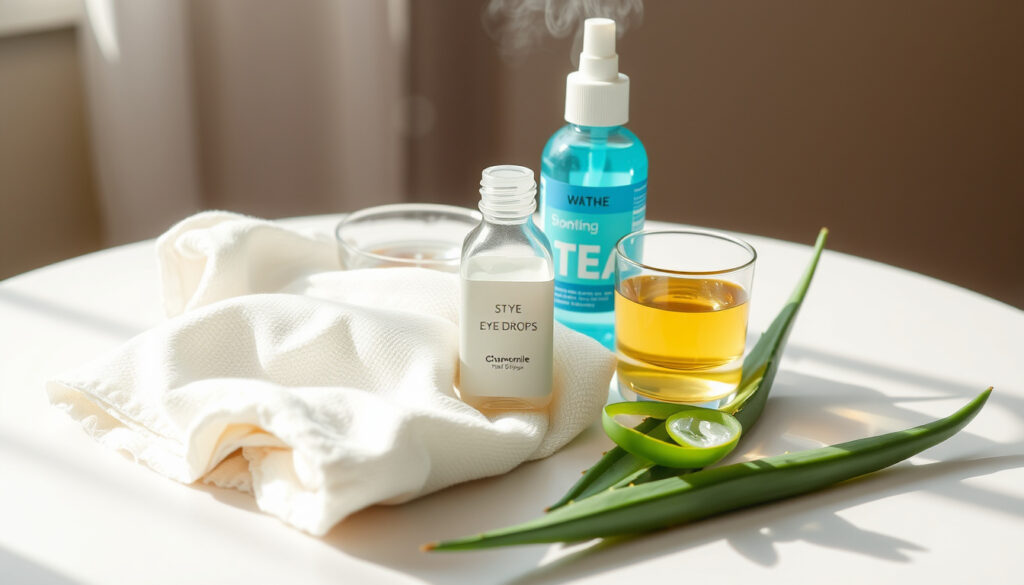
Stye Self-Care: Remedies to Get Rid of a Stye Fast
There’s something maddening about a stye—it rarely threatens your vision, but it can make you feel like a pirate for a week or two. The good news is that most people clear one up at home without needing a doctor, and the fix is straightforward: warmth, patience, and a few habits that stop you from making it worse.
Warm compress duration: 5-10 minutes · Compress frequency: 3-4 times a day · Typical resolution: 1-2 weeks
Quick snapshot
- Warm compress is the most effective home remedy (Healthline)
- Over 70% of styes resolve with conservative care (NCBI StatPearls)
- The stye head typically bursts in 3-4 days (University of Galway)
- Exact healing time varies by individual (Cleveland Clinic)
- Salt water rinse efficacy not formally studied (Cleveland Clinic)
- Tea bag superiority over cloth not proven (Cleveland Clinic)
- Day 1-4: stye head forms and may burst (University of Galway)
- Day 5-7: noticeable shrinking with compresses (NYU Langone Health)
- Week 2: full resolution in most cases (NCBI StatPearls)
- See a doctor if still present after 3-4 weeks (NYU Langone Health)
- Surgical drainage only for stubborn cases (NCBI StatPearls)
- Practice lid hygiene to prevent recurrence (NCBI StatPearls)
The table below summarizes key treatment parameters from authoritative health sources.
| Factor | Recommendation |
|---|---|
| Primary treatment | Warm compress |
| Session length | 5-10 minutes |
| Daily repeats | 3-4 times |
| Cleaning agent | Mild soap and water |
| Full resolution time | 1-2 weeks |
| Conservative success rate | 70% |
How do you get rid of a stye fast?
A warm compress is the cornerstone of stye self-care, and it works by drawing pus to the surface so the bump can drain naturally. Both the NHS video guidance and Moorfields Eye Hospital (a UK specialist eye hospital) recommend this as the first-line approach, with no antibiotics needed for routine cases.
Warm compress method
Soak a clean flannel or washcloth in warm (not hot) water, wring it out, and hold it against your closed eye for 5-10 minutes. The NHS advises repeating this 3-4 times daily. Reheat the cloth every 30 seconds if it cools down. A microwave rice sock—uncooked rice in a clean sock, heated for 15-20 seconds—is a dry alternative that retains warmth longer, according to University of Utah Health (2024 home healing advice).
Eyelid cleaning steps
Gentle eyelid hygiene supports the compress routine. NCBI StatPearls (peer-reviewed treatment guidelines) recommends diluted baby shampoo or a mild soap solution applied with a cotton pad. Wipe from the lash line outward, and use a fresh pad for each wipe. This removes debris and bacteria without irritating the inflamed gland.
OTC pain relief
Over-the-counter pain relievers like ibuprofen can ease discomfort, but they don’t speed healing. Artificial tears may help if the eye feels gritty, though they’re an adjunct—not a replacement—for warm compresses.
What causes a stye in the eye?
A stye (hordeolum) is a red, painful lump that forms on the edge or inside of the eyelid when an oil gland or hair follicle becomes blocked and infected. The culprit is usually Staphylococcus bacteria, which live harmlessly on skin but can trigger inflammation when they get trapped.
Blocked oil glands
The eyelids contain tiny meibomian glands that secrete oil to lubricate the eye. When these glands get clogged— from dead skin cells, makeup, or debris—they can swell and become infected. Patient.info (a UK patient resource that mirrors NHS advice) notes that this blockage is the direct trigger for most styes.
Bacterial infection
Staph bacteria are the primary invaders. University of Galway’s health unit (aligned with Ireland’s HSE health service) confirms that antibiotics are not recommended for routine stye treatment—the body’s immune response handles it if you support it with compresses.
Risk factors like dirty pillowcases
Poor hygiene habits can reintroduce bacteria to the eye area. Sleeping on a dirty pillowcase, using old eye makeup, or touching your eyes with unwashed hands all increase risk. Cleveland Clinic (expert physician-reviewed guidance) specifically warns against sharing face cloths between eyes, as this can spread bacteria.
How long does a stye last?
Most styes follow a predictable timeline: they come to a head in a few days, burst, and gradually shrink away. The NCBI StatPearls notes that over 70% resolve within 1-2 weeks with warm compress care.
Typical duration
The stye head typically bursts within 3-4 days, according to University of Galway. From there, the bump shrinks over the next week or so. NYU Langone Health (academic health center) adds that consistent compresses accelerate this timeline.
When it resolves alone
Left alone—without squeezing or poking—a stye will usually drain on its own. The warmth of a compress encourages this natural process. Dr. Nicholls at University of Utah Health warns that squeezing pushes infection deeper into the gland, which prolongs healing and can worsen symptoms.
Signs it won’t go away
If a stye persists beyond 3-4 weeks, it may need medical intervention. NYU Langone Health notes that persistent cases may warrant topical antibiotics or a minor surgical drainage procedure performed by an ophthalmologist.
Does salt water help a stye?
Salt water rinses are sometimes mentioned in home remedy circles, but the evidence for their efficacy is thin. Cleveland Clinic physician Dr. Goldman states that warm water is what helps a stye come to a head—the medium matters less than the heat.
Salt water effectiveness
There’s no strong clinical endorsement for salt water as a stye treatment. While saline is used for wound irrigation in general, no major health authority specifically recommends it for styes. University of Galway’s HSE-aligned guidance focuses on warm compresses and mild soap—not salt rinses.
Alternative rinses
Black tea bags are sometimes used as warm compresses because tea contains tannins with mild antibacterial properties. Healthline notes this approach, but Cleveland Clinic cautions that tea bags are not proven superior to a clean, warm cloth—and may contain irritants.
When to avoid
Do not use salt water if your eye is already inflamed or the skin around it is broken. A clean, warm cloth is safer, cheaper, and backed by stronger evidence.
Are styes contagious?
Styes are not highly contagious in the way a cold or flu is, but they can spread bacteria under certain conditions. The key risk is direct contact with the infected fluid inside the stye.
Transmission risks
Touching a stye and then touching your other eye or another person can transfer bacteria. However, styes are caused by bacteria that already live on your skin—the infection is opportunistic, not typically caught from someone else.
Prevention hygiene
Cleveland Clinic advises against sharing face cloths or eye makeup, as these can harbor staph bacteria. Wash your hands before and after touching the area, and use separate clean cloths for each compress session.
Sharing towels
Sharing towels that contact the infected eye area is discouraged. If someone in your household has a stye, keep their washcloth and pillowcase separate until it’s healed. This isn’t about panic—it’s about reducing bacterial load on shared surfaces.
Consistent warm compresses are what actually move the needle. The NHS and HSE-aligned protocols both agree on 5-10 minutes, 3-4 times a day. Everything else—lid hygiene, avoiding makeup, clean linens—is support infrastructure.
Over 70% of styes resolve with conservative home care alone. For most people, that means a week of warm compresses beats a trip to the GP. The catch: you have to be consistent. Skipping sessions lets the pus linger.
Confirmed vs. Unclear
Confirmed facts
- Warm compress is the most effective home remedy for styes
- Styes burst in 3-4 days and fully resolve in 1-2 weeks
- Over 70% resolve without antibiotics or medical intervention
- Never squeeze or pop a stye—warmth lets it drain naturally
- Antibiotics are not recommended for routine cases
What’s still unclear
- Exact individual healing timelines vary
- Salt water efficacy not formally studied
- Tea bag superiority over cloth unproven
What the experts say
People may feel the need to pop a stye to get rid of it right away, but this will only push the infection deeper into the gland and make things worse.
— Dr. Nicholls, University of Utah Health
The heat allows the stye to drain on its own. Applying warmth to a stye is what helps it come to a head and resolve itself.
— Dr. Goldman, Cleveland Clinic
Soak a clean flannel in warm water. Hold it against your eye for 5 to 10 minutes. Repeat this 2 to 4 times a day.
For most people, stye self-care comes down to one habit: a warm compress, done consistently, several times a day. The NHS, HSE-aligned Irish guidance, and US academic sources all converge on the same protocol—warmth, patience, lid hygiene, and no picking. If you’re dealing with a stye right now, the move is straightforward: grab a clean cloth, warm it up, and give it 5-10 minutes. Repeat three or four times today, and again tomorrow. By day three or four, you’ll likely feel the bump coming to a head—and that’s the signal things are working.
Related reading: What Kills Stomach Virus – CDC-Recommended Disinfectants · What Is a Good Resting Heart Rate – Age and Fitness Charts
While warm compresses offer quick relief for styes, fast effective home remediesprovide additional steps that speed up healing without medication.
Frequently asked questions
What can trigger styes?
Blocked oil glands trap staph bacteria, leading to infection. Risk factors include poor eyelid hygiene, old eye makeup, dirty pillowcases, and touching your eyes with unwashed hands.
Will a stye go away if I leave it alone?
Yes, most styes resolve on their own within 1-2 weeks. A warm compress speeds the process by drawing pus to the surface so it can drain naturally.
Can a dirty pillowcase cause a stye?
Dirty pillowcases can harbor bacteria that re-inoculate your eyelids each night. Changing pillowcases regularly—especially if you have recurrent styes—is a simple preventive step.
What is the last stage of a stye?
The final stage is drainage and healing. The stye head bursts, pus drains, and the bump gradually flattens over several days. Consistent compresses during this phase help it resolve cleanly.
Will a stye go away in 2 days?
Rarely—the stye head typically needs 3-4 days to come to a head and burst. Full resolution usually takes 1-2 weeks. Consistent compress care can shorten this, but 2 days is on the optimistic end.
What is the fastest way to cure a stye?
The fastest route is a warm compress for 5-10 minutes, 3-4 times daily, combined with gentle lid hygiene and avoidance of eye makeup or contact lenses until it heals.
More related posts
 Watch Pride and Prejudice 2005 Online: Streaming Guide
 Fruit of the Spirit – Biblical Meaning and 9 Qualities
 7 Deadly Sins List – Complete Guide to Meanings and Origins
 40 Degrees C to F: Conversion, Fever Risk, and How Hot It Feels
 Euphrates River Drying Up: Bible Prophecy and Science Explained
 Monica Barbaro Movies and TV Shows: Complete Guide
 Mexico vs Colombia (Oct 2025): Score, Watch, H2H Record
 Right to Work States: Full List, Pros & Cons (2026)