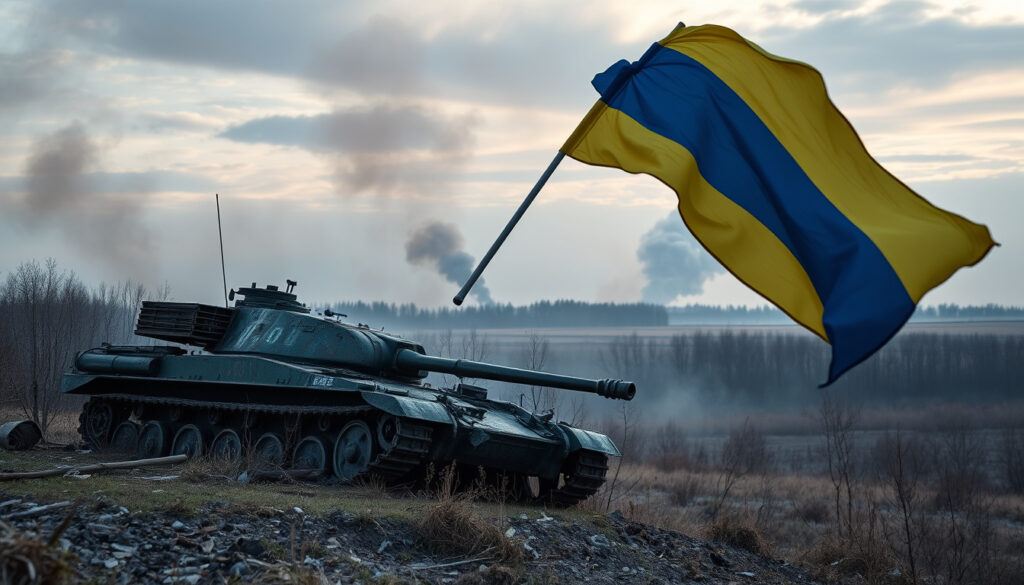
Why Is Russia Attacking Ukraine? Key Causes & War Facts
When Russian tanks rolled into Ukraine on February 24, 2022, many expected a rapid takeover. Instead, the invasion unraveled into a grinding war of attrition that exposed deep flaws in Russia’s military planning and revealed unexpected resilience from Ukraine and its Western allies—understanding why Russia attacked Ukraine isn’t just a history lesson, it’s key to grasping the war’s trajectory and why it’s still ongoing in 2025.
Invasion start date: 24 February 2022 ·
Current territory occupied by Russia: About 18% of Ukraine (as of 2025) ·
Ukrainian civilian casualties (UN estimated): Over 11,000 killed (2022-2025) ·
Russian troop deaths (Western estimate): Over 150,000 killed or wounded ·
Number of Ukrainian refugees: Over 6.5 million fled abroad
Quick snapshot
- Russia launched a full-scale invasion on 24 February 2022 (Britannica, encyclopedic reference)
- Russia demands Ukraine abandon NATO membership aspirations (Council on Foreign Relations, US foreign policy think tank)
- Ukraine is an independent UN member state recognized by the international community (Britannica, encyclopedic reference) (Britannica, encyclopedic reference)
- Russia annexed Crimea in 2014, marking the start of the current conflict phase (Britannica, encyclopedic reference) (Britannica, encyclopedic reference)
- Exact Russian casualty numbers remain disputed between sources (Britannica, encyclopedic reference) (Reuters, global news agency)
- When the war will end — no ceasefire negotiations in 2025 (Reuters, global news agency)
- Whether territorial concessions will be part of any future peace deal (The Moscow Times, independent English-language Russian news outlet)
- Level of Russian public support for the war due to limited independent polling (Deutsche Welle, German public broadcaster)
- 2014: Russia annexes Crimea; war in Donbas begins (Britannica, encyclopedic reference) (Institute for the Study of War, US-based security research institute)
- February 2022: Russia launches full-scale invasion (Britannica, encyclopedic reference) (Institute for the Study of War, US-based security research institute)
- 2022–2023: Ukraine counteroffensives recapture Kharkiv and Kherson (Britannica, encyclopedic reference) (Institute for the Study of War, US-based security research institute)
- 2024: War grinds into positional trench warfare (Institute for the Study of War, US-based security research institute)
- 2025: Ongoing fighting; no diplomatic resolution (Reuters, global news agency) (Institute for the Study of War, US-based security research institute)
- Western military aid to Ukraine continues, including advanced systems (Council on Foreign Relations, US foreign policy think tank) (Institute for the Study of War, US-based security research institute)
- Russia likely to maintain its demand for “root causes” resolution, which ISW interprets as Ukraine’s capitulation (Institute for the Study of War, US-based security research institute)
- No peace deal expected in 2025; war of attrition continues (Reuters, global news agency) (Institute for the Study of War, US-based security research institute)
Five key data points capture the war’s scale and ongoing nature.
| Label | Value |
|---|---|
| Invasion date | 24 February 2022 |
| Russian troops initially deployed | Up to 200,000 |
| Ukrainian population (pre-war) | 44 million |
| Number of occupied regions | Donetsk, Luhansk, Zaporizhzhia, Kherson (partial), plus Crimea |
| Current status | Ongoing war, no ceasefire as of 2025 |
What are Russia’s demands on Ukraine?
Demands for neutrality and no NATO membership
- Russia has demanded that Ukraine abandon its NATO membership aspirations and adopt permanent neutrality. In December 2021, Russia’s foreign ministry demanded written assurances that Ukraine would never join the alliance (Council on Foreign Relations, US foreign policy think tank).
- By 2025, Russian officials continued to frame any peace deal as requiring action on these “root causes,” which the Institute for the Study of War interprets as demands for Ukraine’s capitulation and a pro-Russian government in Kyiv (Institute for the Study of War, US-based security research institute).
Demands for territorial concessions (Crimea, Donbas)
- Russia demands recognition of Crimea as Russian territory, following its annexation in 2014 (Britannica, encyclopedic reference).
- Moscow also wants Ukraine to cede the Donetsk and Luhansk regions, which are partially controlled by Russian-backed separatists (Taylor & Francis, academic journal article).
Demands for demilitarization and denazification
- Putin’s stated reason for the invasion included the false claim that Ukraine was committing genocide against Russian speakers in Donbas, and he called for the “denazification” of Ukraine’s government (Britannica, encyclopedic reference).
- Russia also demanded that Ukraine limit its military capacity and remove NATO military infrastructure from Eastern Europe (Taylor & Francis, academic journal article).
Russia’s demands are not a negotiating position but a maximalist wish list. The Kremlin’s insistence on “root causes” has been assessed by the Institute for the Study of War as shorthand for Ukraine’s full capitulation — a demand Ukraine will not accept, ensuring the war continues.
The implication: Russia’s demands are structured to restore its sphere of influence over Ukraine, a goal that has only become more distant as the war grinds on.
Who started the war between Russia and Ukraine?
Russia’s official narrative: Ukraine and the West
- Russia claims it acted in self-defense under UN Article 51, citing NATO’s eastward expansion as a threat to its security (Deutsche Welle, German public broadcaster).
- Putin has repeatedly claimed that Ukraine’s pro-European shift and potential NATO membership left Russia no choice but to launch a “special military operation” (Britannica, encyclopedic reference).
Ukraine’s position: unprovoked aggression
- Ukraine and its allies view the invasion as an act of unprovoked aggression. Ukraine’s Foreign Ministry has stated that Russia’s claims are a pretext for territorial conquest (Council on Foreign Relations, US foreign policy think tank).
- President Volodymyr Zelenskyy has called on the international community to hold Russia accountable for war crimes (Britannica, encyclopedic reference).
International legal consensus on aggression
- UN General Assembly resolutions have condemned Russia’s invasion and demanded withdrawal, with overwhelming majorities voting in favor (Britannica, encyclopedic reference).
- The International Court of Justice has ordered Russia to halt its military operations, though Russia has ignored the ruling (Council on Foreign Relations, US foreign policy think tank).
The pattern: The legal and diplomatic consensus is clear — Russia started the war. Moscow’s narrative of self-defense has not gained traction outside its own circles.
What is the root cause of the conflict between Russia and Ukraine?
Historical tensions and Soviet legacy
- Many Ukrainians view the Soviet era as a period of oppression, and the 2014 Euromaidan revolution was a rejection of pro-Russian leadership. Russia responded by annexing Crimea and fomenting war in Donbas (Britannica, encyclopedic reference).
- Putin has described Ukraine as an artificial state created by the Soviet Union, a view that contradicts Ukrainian national identity and sovereignty (Deutsche Welle, German public broadcaster).
NATO expansion and security concerns
- NATO’s eastward expansion after the Cold War is cited by Russia as a major cause. However, NATO’s membership process is voluntary, and Ukraine has not yet been offered membership (Council on Foreign Relations, US foreign policy think tank).
- In 2025, Putin still demands a written pledge from Western powers not to enlarge NATO eastward, effectively ruling out Ukraine, Georgia, and Moldova (The Moscow Times, independent English-language Russian news outlet).
Ukraine’s shift toward the European Union
- Ukraine’s 2013 decision to pursue an association agreement with the EU, rather than joining Russia’s Eurasian Economic Union, triggered the Euromaidan protests and subsequent Russian intervention (Britannica, encyclopedic reference).
- Energy geopolitics also play a role: Ukraine sits on critical gas transit routes and has sought to reduce its energy dependence on Russia (Council on Foreign Relations, US foreign policy think tank).
NATO expansion is often cited as the root cause, but the invasion has actually strengthened NATO: Finland and Sweden joined the alliance, and NATO’s presence in Eastern Europe has increased. Russia’s actions have achieved the opposite of what they were meant to prevent.
Why do Russians support the war in Ukraine?
State propaganda and media control
- State-controlled media in Russia frame the war as a defensive struggle against a hostile West and a “Nazi” regime in Kyiv. Independent polling is limited, but available data suggests many Russians accept this narrative (Deutsche Welle, German public broadcaster).
- Russia has also blocked independent outlets and social media platforms, making it difficult for alternative viewpoints to reach the public (Britannica, encyclopedic reference).
Historical narratives about Ukraine and the West
- Putin’s speeches often invoke the memory of World War II, portraying Russia as the defender of civilization against fascism. This resonates with older generations who grew up with Soviet patriotic education (Deutsche Welle, German public broadcaster).
- The Kremlin also promotes the idea that Ukraine is historically part of Russia, a claim that many Russians accept due to decades of shared history in the Soviet Union (Britannica, encyclopedic reference).
Patriotic and nationalist sentiment
- War has traditionally been a rallying point for Russian nationalism. The government has used patriotic campaigns to maintain domestic support, even as the war’s costs mount (Reuters, global news agency).
- However, there are signs of war fatigue: the Kremlin has avoided a full mobilization to prevent public backlash, and anecdotal reports suggest war weariness is growing, especially among urban populations (Taylor & Francis, academic journal article).
The catch: Russian support is real but not monolithic. Limited polling and emigration patterns suggest a significant minority opposes the war, but fear of repression keeps dissent quiet.
Why is Russia doing so badly against Ukraine?
Russian military failures: logistics and planning
- Russia expected a quick victory but met stiff resistance. The initial assault on Kyiv failed due to poor logistics, low morale, and Ukrainian counterattacks (Britannica, encyclopedic reference).
- By 2024, the war turned into a war of attrition, with Russia suffering heavy casualties. Western estimates place Russian killed and wounded at over 150,000 (Council on Foreign Relations, US foreign policy think tank).
Ukrainian resilience and Western military aid
- Ukraine received advanced weapons from NATO, including HIMARS rocket systems, tanks, and air defense systems, which helped it hold the line and launch counteroffensives (Council on Foreign Relations, US foreign policy think tank).
- Ukraine’s military adapted quickly, using decentralized command and Western intelligence to target Russian supply lines and command posts (Institute for the Study of War, US-based security research institute).
Sanctions and internal dissent
- Western sanctions have crippled Russia’s access to high-tech components, limiting its ability to produce precision weapons and maintain military equipment (Council on Foreign Relations, US foreign policy think tank). For more on the economic impact, see US Economy News Today: GDP, Inflation & Recession Outlook.
- Internal dissent, while suppressed, has forced the Kremlin to avoid full mobilization, restricting its troop numbers on the front lines (Reuters, global news agency).
Russia’s underperformance is not just a battlefield story. It reflects a systemic failure of military planning, intelligence, and strategic thinking. The Kremlin’s gamble that Ukraine would collapse quickly failed, and the cost has been enormous — both in lives and in Russia’s long-term economic and diplomatic standing.
Timeline of the Russia-Ukraine War
- 2014 – Russia annexes Crimea; war in Donbas begins.
- February 2022 – Russia launches full-scale invasion of Ukraine.
- 2022–2023 – Ukraine counteroffensives recapture Kharkiv and Kherson.
- 2024 – War grinds into positional trench warfare.
- 2025 – Ongoing fighting; Western aid continues; no diplomatic resolution.
Sources: Britannica, encyclopedic reference; Institute for the Study of War, US-based security research institute; Reuters, global news agency.
Confirmed facts
- Russia invaded Ukraine on 24 February 2022 (Britannica, encyclopedic reference)
- Russia demands Ukraine not join NATO (Council on Foreign Relations, US foreign policy think tank)
- Ukraine is an independent UN member state (Britannica, encyclopedic reference)
- Russia annexed Crimea in 2014 (Britannica, encyclopedic reference)
What’s unclear
- Exact Russian casualty numbers (disputed between sources) (Britannica, encyclopedic reference)
- When the war will end (Reuters, global news agency)
- Whether territorial concessions will be part of any peace deal (The Moscow Times, independent English-language Russian news outlet)
Key perspectives from officials
“The Russian Federation launched a full-scale invasion of Ukraine on 24 February 2022, in violation of the UN Charter and international law.”
— Ukrainian Foreign Ministry, official statement (Council on Foreign Relations, US foreign policy think tank)
“Ukraine will never be a threat to the Russian people. Russia’s demand for neutrality is a demand for our surrender.”
— President Volodymyr Zelenskyy, address to the UN (Britannica, encyclopedic reference)
“The goal of the special military operation is to protect people who have been subjected to genocide by the Kyiv regime.”
— President Vladimir Putin, 24 February 2022 speech (Britannica, encyclopedic reference)
“NATO’s door remains open. The alliance will not be drawn into the conflict, but we will continue to support Ukraine’s right to self-defense.”
— NATO Secretary General, statement on the alliance’s policy (Council on Foreign Relations, US foreign policy think tank)
For Ukraine and its Western allies, the choice is clear: continued military support and economic pressure on Russia, or a negotiated settlement that risks rewarding aggression. For Russia, the war has become a strategic dead end — a costly conflict that has weakened its military, isolated it diplomatically, and strengthened the very alliance it sought to undermine. For more on the historical context of great power conflicts, see Franklin D. Roosevelt: New Deal, WWII & Personal Struggles.
reuters.com, en.wikipedia.org, en.wikipedia.org, aljazeera.com, understandingwar.org
To understand the full scope of the conflict, it’s essential to examine the reasons behind Russias invasion and how they have evolved over time.
Frequently asked questions
How many Ukrainian civilians have died in the war?
UN estimates as of 2025 report over 11,000 civilian deaths, though the actual number is likely higher due to underreporting in occupied areas (Britannica, encyclopedic reference).
Has Russia used nuclear threats during the conflict?
Yes, Putin has repeatedly made nuclear threats, but the U.S. and NATO have stated they see no change in Russia’s nuclear posture that would require a response (Council on Foreign Relations, US foreign policy think tank).
What military aid has the US provided to Ukraine?
The U.S. has provided over $75 billion in security assistance since 2022, including HIMARS, tanks, and air defense systems (Council on Foreign Relations, US foreign policy think tank).
Is the war in Ukraine still ongoing in 2025?
Yes, as of 2025, the war continues with no ceasefire in place. Fighting is concentrated in eastern and southern Ukraine (Reuters, global news agency).
What sanctions have been placed on Russia?
The U.S., EU, and allies have imposed sweeping sanctions targeting Russia’s financial system, energy exports, and technology imports. The sanctions have significantly reduced Russia’s access to foreign capital and components (Council on Foreign Relations, US foreign policy think tank).
Can Ukraine win the war against Russia?
Ukraine’s ability to win depends on sustained Western aid and internal political will. Russia’s larger population and resources give it an advantage in a long war, but Ukraine has shown it can defend effectively (Institute for the Study of War, US-based security research institute).
What is the Minsk Agreement and why did it fail?
The Minsk Agreements (2014–2015) were ceasefires and political frameworks meant to end the Donbas war. They failed because both sides accused each other of violations, and Russia never fully withdrew its forces (Britannica, encyclopedic reference).
More related posts
 Where to Watch FC Barcelona vs Real Madrid: Live Streams & Channels
 Tom Hiddleston Movies and TV Shows: Complete Guide (2025)
 Shrimp Fried Rice Recipe: Easy, Authentic & Perfect Results
 Who Is Playing Football Today? Live Matches & TV Guide
 Best Turkish Restaurant Near Me in Dublin: Menu, Reviews & More
 Seo Ye-ji: Scandals, Comeback and Kim Soo Hyun Controversy
 How Long to Boil Hot Dogs: A Complete Guide (2024)
 The Amazing Spider-Man 2 – Plot, Cast and Franchise Fate