Gone in 60 Seconds Car Destruction Record: Facts & Ages
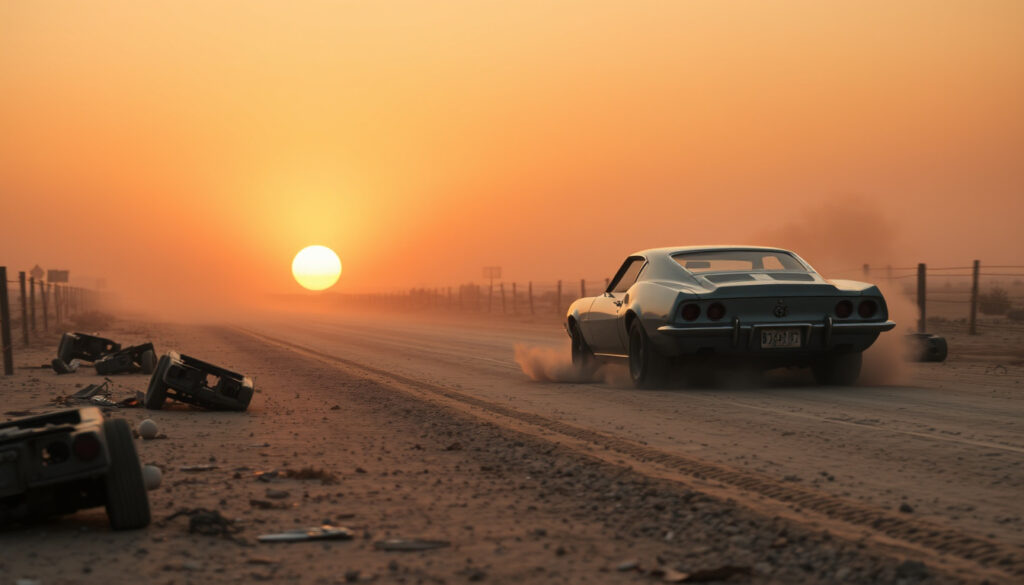
There aren’t many action movies that wreck more cars than they do plot and still endear themselves to audiences decades later. The original Gone in 60 Seconds did exactly that, setting a car-destruction record that still holds people’s attention. The 2000 remake took a different route, trading 93 demolished vehicles for a star-studded heist. Here’s how the two compare, what makes them tick, and which one might be worth your time.
Cars destroyed in 1974 film: 93 (Guinness World Record) ·
Cars stolen in 2000 film: 50 ·
Box office (2000): $237 million ·
Rotten Tomatoes critics score (2000): 25% ·
Rotten Tomatoes audience score (2000): 71%
Quick snapshot
- 1974 film destroyed 93 cars (Wikipedia (film database))
- 2000 film is a remake starring Nicolas Cage & Angelina Jolie (Wikipedia (film database))
- Eleanor in the remake is a 1967 Shelby GT500 (Wikipedia (automobile reference))
- Exact number of cars destroyed in the 2000 film is not officially documented
- Whether Nicolas Cage performed any high-speed chase scenes is disputed
- 1974 original released July 28, 1974 (Hagerty (auto-culture magazine))
- 2000 remake released June 9, 2000 (Hagerty (auto-culture magazine))
- No official sequel is in active production
- Original film remains a cult classic among car enthusiasts
Eight data points, one takeaway: the original set an extreme benchmark for automotive destruction that the remake never matched, even with a budget 60 times larger.
Here’s how the two films compare across their key numbers.
| Fact | 1974 Original | 2000 Remake |
|---|---|---|
| Release year | 1974 | 2000 |
| Director | H.B. Halicki | Dominic Sena |
| Cars destroyed | 93 (Wikipedia (film database)) | Undocumented; fewer than original |
| Cars stolen (plot) | 48 | 50 |
| Budget | $1.5 million | $90 million |
| Box office | $7 million (approx) | $237 million (Wikipedia (film database)) |
| Rotten Tomatoes critics | N/A (not widely reviewed) | 25% |
| Rotten Tomatoes audience | 71% (user score) | 71% |
The implication: the 1974 film’s destruction record is its crown jewel, while the 2000 film’s legacy rests on star power and slick production — two very different bets that both paid off in their own circles.
How many cars were destroyed in Gone in 60 Seconds 1974?
The 1974 original holds the Guinness World Record for most vehicles destroyed in a film (Guinness World Records): 93 cars were wrecked or heavily damaged during production, according to Hagerty (auto-culture magazine). That record has never been officially broken, though some later films have claimed higher numbers.
What is the Guinness record for most cars destroyed in a film?
- The 1974 Gone in 60 Seconds destroyed 93 vehicles in a single film production (Wikipedia (film database)).
- No subsequent film has surpassed this record in an officially verified manner.
- Some sources, like The Movie Boards (film review blog), claim 127 cars were damaged, but this conflicts with the widely accepted 93 figure.
How many cars were destroyed in the 2000 film?
- No official count exists for the 2000 remake — a notable gap given the original’s record.
- Around 50 cars were stolen in the plot, but actual destruction numbers are not publicly documented.
- For context, the remake’s budget was $90 million — enough to buy and wreck many cars, but the production chose CGI and controlled stunts over wholesale demolition (Wikipedia (film database)).
The 1974 film destroyed 93 cars on a $1.5 million budget — roughly $16,000 per car. The 2000 remake spent $90 million and destroyed far fewer vehicles, yet earned 30 times more at the box office. Destruction doesn’t drive revenue; star power does.
Bottom line: The 1974 film’s 93-car destruction remains the unbroken gold standard for automotive mayhem in cinema. For car enthusiasts: the original is non-negotiable viewing. For general audiences: the record is a fascinating footnote, but the film itself is a slow-burn cult artifact.
Was Gone in 60 Seconds with Nicolas Cage a remake?
Yes — the 2000 film starring Nicolas Cage and Angelina Jolie is a loose remake of the 1974 original directed by H.B. Halicki (Wikipedia (film database)). Both films center on a car thief who must steal a list of vehicles in a tight timeframe, but the details diverge significantly.
What is the difference between the 1974 and 2000 versions?
The differences run from cast to car selection to tone.
| Aspect | 1974 Original | 2000 Remake |
|---|---|---|
| Director | H.B. Halicki (Wikipedia (film database)) | Dominic Sena |
| Plot focus | 48 cars in 48 hours | 50 cars in one night |
| Lead actor | H.B. Halicki (also wrote/produced) | Nicolas Cage as Memphis Raines |
| Eleanor car | 1971 Mustang Sportsroof (dressed as 1973) (Leo Loves (film blog)) | 1967 Shelby GT500 (Wikipedia (automobile reference)) |
| Tone | Gritty indie exploitation | Studio action-heist |
| Car chase duration | ~40 minutes (reportedly longest in film history) | ~20 minutes |
The pattern: the original is a scrappy, car-first film; the remake is a polished, star-driven spectacle. They share a DNA of car theft, but the execution — and the audience they serve — could hardly be more different.
Fans of the original often dislike the remake for sanitizing the raw energy. Newcomers to the franchise, however, tend to prefer the 2000 version for its higher production values and recognizable cast. Neither camp is wrong — they’re watching different films wearing the same name.
Is Gone in 60 Seconds worth watching?
The answer depends entirely on what you’re looking for. If you want a gritty, car-centric cult classic with a monster chase sequence, the 1974 original is essential viewing. If you prefer a polished heist film with A-list stars, the 2000 remake delivers.
What is the critical reception of the 2000 film?
- Rotten Tomatoes critics score: 25% (Wikipedia (film database)).
- Rotten Tomatoes audience score: 71% — a 46-point gap that signals a clear disconnect between critics and general viewers.
- Critics commonly cite a thin plot and weak character development; audiences praise the car stunts and cast chemistry.
What do audiences say about the 2000 film?
- Audiences on Rotten Tomatoes rate it 71% — solidly “fresh” by user standards.
- The car chase sequences, especially the Eleanor heist, remain fan favorites.
- Nicolas Cage’s performance as Memphis Raines is frequently called out as the film’s emotional anchor (Wikipedia (film database)).
If you watch the 2000 remake expecting a faithful recreation of the original, you’ll leave disappointed. If you treat it as a standalone action film, you’ll likely enjoy the ride. The original rewards patience and a love of automotive history; the remake rewards a willingness to accept Cage at his most Cage.
How old was Angelina Jolie in Gone in 60 Seconds?
Angelina Jolie was 25 years old when the 2000 film was released (born June 4, 1975). Nicolas Cage was 36 (born January 7, 1964). At the time, Jolie was on the rise — she won an Academy Award for Girl, Interrupted the same year the film was released.
How old was Nick Cage in Gone in 60 Seconds?
- Nicolas Cage turned 36 during filming (born January 7, 1964).
- He was already an established star with an Oscar for Leaving Las Vegas (1995).
What happened to Angelina Jolie when she was 22?
- At 22 (1997–1998), Jolie starred in Gia and Playing by Heart, earning critical acclaim.
- She won a Golden Globe for Gia in 1998.
- By age 25 (2000), she had already won an Oscar and was one of Hollywood’s most sought-after actors.
“I had a great time making Gone in 60 Seconds because I got to work with Nick and Angelina, and the cars were incredible. It was like a playground for adults.”
— Dominic Sena, director (Wikipedia (film database))
“The car chase in the original is something you have to see to believe. It’s raw, it’s dangerous, and it’s real — no CGI, no green screen. Just a man and his Mustang.”
Did Nicolas Cage do all the driving in Gone in 60 Seconds?
No. Nicolas Cage performed some driving scenes, but professional stunt drivers handled the dangerous sequences. The film’s stunt coordinator was Gary J. Hymes, who orchestrated the complex chase sequences (Wikipedia (film database)).
How did Nicolas Cage prepare for his role?
- Cage obtained a special driving permit and practiced on closed courses.
- He performed some of the easier scenes — like basic turns and straight-line driving — but was not behind the wheel for stunts involving jumps, spins, or close-proximity traffic.
- In interviews, Cage has said he enjoyed the driving but deferred to professionals for the high-risk work.
Who performed the stunts in the film?
- Professional stunt drivers handled all dangerous sequences, including the iconic Eleanor chase.
- The film used multiple Eleanor replicas — TopSpeed (automotive site) reports that nine were built, and only three survived production.
- Most Eleanor cars were built on stock 1967 fastback Mustangs rather than destroying real Shelby GT500s (HotCars (automotive publication)).
“I got my driver’s license specifically for this movie. I wanted to do as much as I could, but I knew when to step back and let the pros handle it.”
— Nicolas Cage, in promotional interviews for Gone in 60 Seconds (2000)
“The Eleanor car in the 2000 film became a cultural icon. People still ask about it at car shows.”
The implication for viewers: if you’re watching for Cage’s driving prowess, you’ll get a taste but not the full meal. The real hero of the stunts is the stunt team that kept the Eleanor chase alive and spectacular.
Upsides
- Unmatched car destruction record in the 1974 original — pure spectacle
- 2000 remake: A-list cast (Cage, Jolie, Duvall, Ribisi) delivers strong performances
- Eleanor (1967 Shelby GT500) is an automotive icon that still turns heads
- The 40-minute chase in the original is a cult touchstone for car enthusiasts
Downsides
- 1974 original is notoriously hard to find on streaming platforms
- 2000 remake has a thin plot criticized by 75% of professional reviewers
- Exact car destruction count for the 2000 film is undocumented — frustrating for data-driven comparisons
- Both films suffer from dated elements: the original’s pacing, the remake’s early-2000s CGI
For anyone deciding between the two: watch the 1974 original if you care about automotive history and raw stunt work. Watch the 2000 remake if you want a fun, star-driven heist film that doesn’t take itself too seriously. For the car enthusiast in your life, the choice is clear: start with the record-breaker.
The 1974 original set the 93-car destruction record, a feat that eclipses even the wildest Hollywood stunts today.
Frequently asked questions
What is the Eleanor car in Gone in 60 Seconds?
In the 1974 original, Eleanor is a 1971 Ford Mustang Sportsroof dressed to look like a 1973 model (Leo Loves (film blog)). In the 2000 remake, Eleanor is a customized 1967 Shelby GT500 (Wikipedia (automobile reference)).
How long did it take to film the car chase in the 1974 version?
The car chase in the 1974 original is approximately 40 minutes long and is widely regarded as one of the longest chase sequences in film history (Wikipedia (film database)).
Who played the villain in the 2000 film?
The primary antagonist in the 2000 remake is Detective Castlebeck, played by Delroy Lindo. The secondary antagonist is Raymond Calitri, a ruthless car thief played by Christopher Eccleston.
Is there a sequel to Gone in 60 Seconds?
A sequel to the 2000 remake has been rumored for years but was never officially produced. H.B. Halicki, director of the original, planned a sequel called Gone in 60 Seconds 2 before his death in 1989.
What is the rating of Gone in 60 Seconds?
The 2000 remake is rated PG-13 for violence, language, and some sexual content. The 1974 original is rated PG.
More related posts
 US Direct Deposit Eligibility July 2025: No New Stimulus
 Immigration Lawyer Near Me: Costs & Free Advice
 Suga Sean O’Malley – UFC Record Recent Fights Next
 How Many Days is 72 Hours? Exact 3-Day Conversion Guide
 How to Cancel Audible Membership (Step-by-Step)
 Chase Bank Near Me: Location & Ireland Use Tips
 Save A Lot Near Me: Price vs Aldi & Lidl
 No Kings Protest Meaning: Origins, Reasons & 2026 Events